

Is Your Google Business Profile Helping Your Business or Hurting It?
WEST PALM BEACH, FL – For years, businesses treated their website as the front door of their online presence. Increasingly, however, a potential customer may learn almost everything they need to know about a company before ever visiting its website.
Google Search and Google Maps can display a business name, location, phone number, hours, photos, services, reviews, directions and other information directly within the search results. For many local businesses, the Google Business Profile has become one of the most visible pieces of digital real estate they control. It should not be treated as something that was claimed once and forgotten.
Google recommends that businesses keep their profiles complete and accurate, maintain current hours, respond to reviews and regularly manage the information customers see. Google says complete and accurate business information helps it better match businesses with relevant local searches. That makes routine profile maintenance increasingly important.
Keep Business Hours Up to Date
If Google asks whether your business hours are correct, answer it. If holiday hours need to be confirmed, confirm them. If Google suggests a change to your information, review it. Google collects business information from owners, websites, users and other sources in an effort to keep local listings current. It specifically recommends confirming special hours around holidays, even when those hours are unchanged, so customers know the information is current.
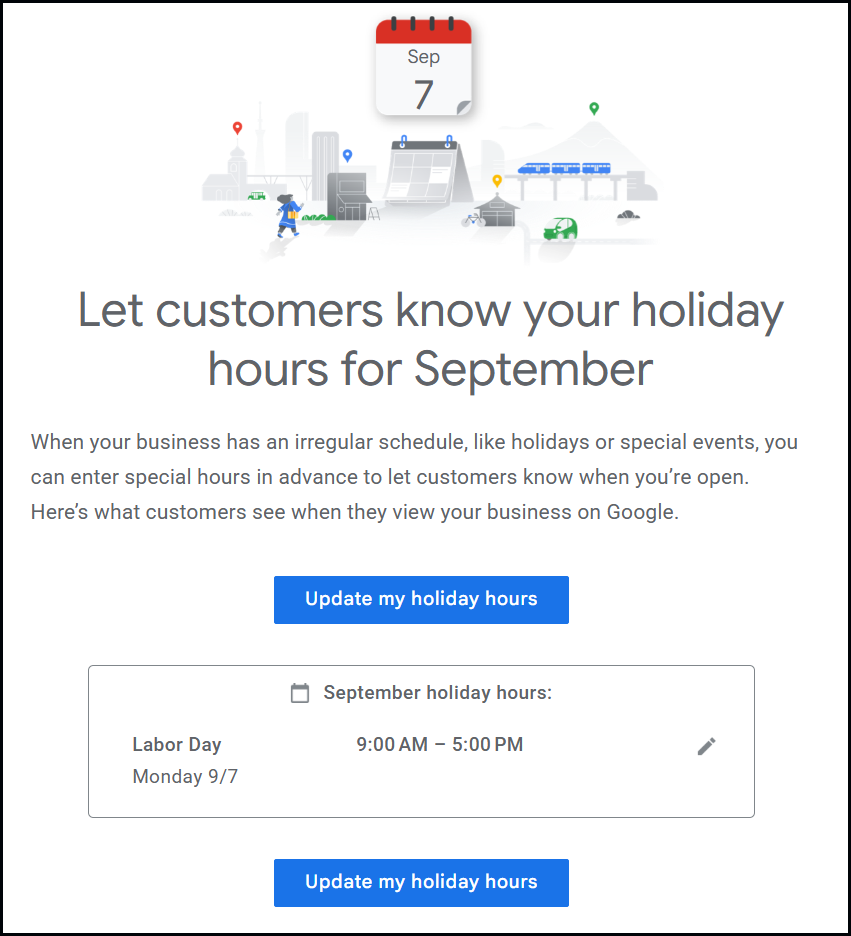
Google has not said that simply clicking a button to confirm your hours creates a direct ranking boost. What it has made clear is that accurate and current information matters. An owner who rarely checks the profile risks allowing outdated information to remain visible to customers or allowing changes from other sources to go unnoticed.
Make Sure the People Answering Your Phone Have the Right Information
There is another part of Google Business Profile management that many businesses may not even realize is happening. Google can call the business. Google says it uses automated calls and other automated messages to confirm information such as operating hours, whether certain services are available, product availability and other business details. In some cases, Google may also call on behalf of a customer who is trying to book an appointment, check availability or obtain information about a service.
That means the person answering the company phone should know the correct information about the business. If your Google Business Profile says you are open on Saturday but an employee tells Google that the business is closed on Saturday, that response may not simply disappear when the call ends.
Google states that information provided during its automated calls, texts and WhatsApp interactions may be used to update a Business Profile. Changes resulting from those calls can be reviewed by Google and may appear as pending before being published.
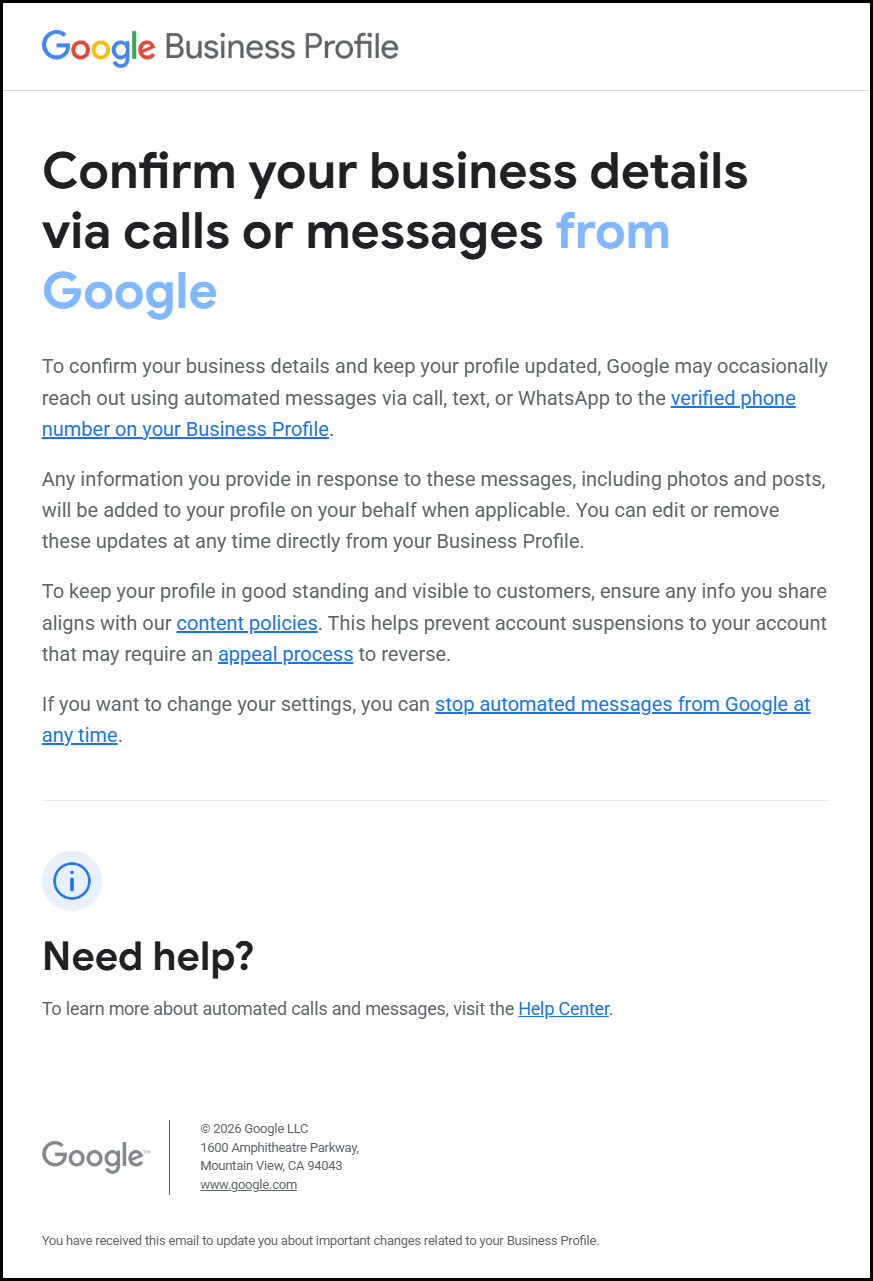
The same principle can apply to other business details Google is trying to verify. If the business serves a particular area, offers certain services or operates under specific hours, the employees answering the phone should know what the company officially represents online.
Otherwise, the business can create conflicting signals itself. The website says one thing. The Business Profile says another. Someone answering the telephone tells Google something different again. That is exactly the kind of inconsistency a business should avoid.
Google’s Business Profile terms give Google broad permission to use Business Profile information in connection with its services, while Google also provides ways for businesses to opt out of certain automated calls and texts.
The practical lesson is simple: make sure the people answering your business telephone know your hours, service area, major services and other basic company information. What they say may become part of what Google knows about your business.
Review Frequency Matters
Reviews deserve the same kind of ongoing attention. Businesses often focus almost entirely on the total number of reviews they have accumulated. Review count matters, and Google says both review volume and positive ratings can contribute to local prominence.
But businesses should also pay attention to how current those reviews are. A company with 300 reviews but nothing new in the past year presents a very different picture from a company with 180 reviews that continues to receive new feedback every week.
That is why review frequency matters.
The objective should not be to run one aggressive review campaign, collect dozens of reviews and then stop. Businesses should develop a steady process for requesting legitimate feedback from customers throughout the year.
Recent reviews show prospective customers that people are still actively doing business with the company. They help keep the profile from looking stale and provide customers with newer experiences to consider.
Businesses should also respond to their reviews. Those responses are not written only for the customer who left the review. They are visible to everyone who reads the profile afterward. A professional response shows that someone is paying attention, values customer feedback and is actively managing the company’s reputation. Positive reviews can be acknowledged naturally, while negative reviews can be addressed professionally so future customers can see how the company handles problems.
Google itself encourages businesses to respond to reviews as part of actively managing a Business Profile.
The review is only half of the conversation. The business response becomes part of the public record too.
Connect Your Social Media Profiles
Businesses should also make sure their Google Business Profile is connected to the social media accounts they actively maintain. Google allows businesses to associate major social profiles with their Business Profile, helping users find more current information about the company across the web.
That connection is becoming increasingly important because Google is looking beyond the traditional business website when determining what information to show users. In supported situations, Google can surface social content related to events, offers and other current business activity within its local ecosystem.
A restaurant might announce a weekend special on Instagram. A retailer may promote a sale on Facebook. A contractor might post photographs of a recently completed project. A company may announce an event, new service or temporary closure.
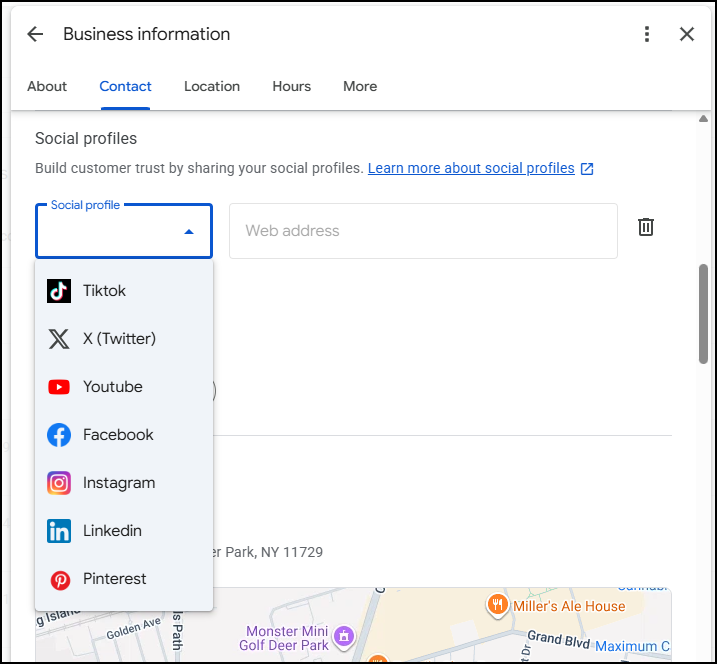
Those updates help create a more current picture of what the business is doing right now. The same broader principle matters as Google expands AI-driven search experiences. Search results increasingly pull together information from multiple sources rather than relying solely on one company webpage. That does not mean every social media post will automatically appear in an AI-generated answer, nor does linking an account guarantee that Google will use it.
It does mean businesses have another reason to make sure their social profiles are accurate, active and clearly connected to their broader web presence. If your business is running a special, holding an event, introducing a new service or making an important announcement, that information should not necessarily live in only one place.
Your website, Google Business Profile and active social media accounts should reinforce one another.
Google Is Likely the First Place a Customer Meets Your Business
The larger issue is that Google Business Profiles are becoming destinations of their own. A customer searching for a plumber, attorney, restaurant, contractor, dentist, real estate company or other local business can often compare several companies without immediately visiting any of their websites. They can see ratings, reviews, hours, photographs, services, contact information and directions directly within Google.
The website still matters. It provides depth, establishes authority, supports organic visibility and gives the business much greater control over its message. But the website is no longer guaranteed to be where the customer first encounters the company.
For many local searches, Google is that first point of contact.
Businesses should therefore treat their Google Business Profile as an active part of their overall web presence. Hours should be checked. Services should remain accurate. Photos should stay current. Reviews should be monitored and answered. Social profiles should be connected. Suggested edits should be reviewed. Employees answering the telephone should know the same basic information the company is publishing online.
Google says local results are primarily based on relevance, distance and prominence. A business cannot control how far away a customer happens to be, but it can control whether the information Google has about the company is accurate, complete and current.
The most important change may simply be one of mindset. A Google Business Profile is not a listing that gets created and checked off a marketing to-do list. It is a living representation of the business in one of the places where customers are most likely to find it.
When Google asks you to confirm your hours, confirm them. When customers leave reviews, respond. When services change, update them. When you publish important information on social media, make sure those accounts are connected. And when someone answers your business telephone, make sure that person knows what the business actually does, where it operates and when it is open.
The goal is not simply to have a Google Business Profile.
The goal is to have one that accurately reflects a business that is still active, responsive and being managed.
 Enjoyed This Content?
Like our coverage of search, SEO, AI, and digital publishing? Add SEARCHEN NETWORKS® as a Google Preferred Source to discover more of our articles in Google Search.
Add SEARCHEN NETWORKS®