

Giving Google Automation the Keys to Your Budget
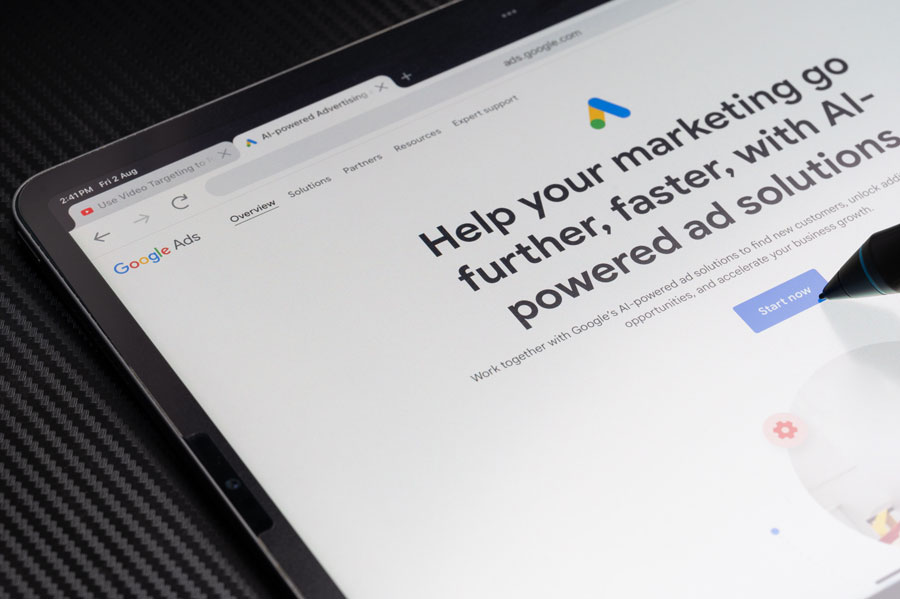
WEST PALM BEACH, FL – Google Ads has a solution for business owners who want to advertise online without learning how Google Ads actually works. They are called Smart Campaigns. The pitch is certainly attractive. Tell Google about your business. Choose what you want customers to do. Select a location. Give Google a few keyword themes. Establish a budget. Write some basic advertising copy. Then let Google’s artificial intelligence handle much of the rest.
Google describes Smart Campaigns as an easy advertising solution for small businesses that can be set up quickly and operated with minimal ongoing management. The system can automatically manage bidding, generate certain advertising assets, determine searches related to broad keyword themes, and distribute advertisements across Google properties and partner websites. That sounds great. But there is another way to describe the same arrangement:
You give Google the money, tell Google generally what you want, and give Google considerable authority to decide how to spend it. That’s an important distinction. Smart Campaigns make Google Ads easier to buy and easier for Google to automate. But that convenience can come at the expense of advertiser control, transparency, targeting precision and the ability to optimize a campaign around the economics of an individual business.
And there is another fact worth remembering whenever Google recommends an easier way to advertise: Google gets paid when advertisers spend money. Your business makes money only when that advertising produces something valuable. Those two objectives can overlap, but they are not the same thing.
What Is a Google Ads Smart Campaign?
Smart Campaigns are a simplified version of Google Ads designed primarily for businesses that do not want to manage the complexity of a conventional advertising campaign. Instead of constructing detailed keyword lists, selecting keyword match types, organizing ad groups and managing numerous campaign settings, an advertiser can provide Google with several broad pieces of information and allow Google’s systems to make many of those decisions automatically.
Google says advertisers generally establish a budget, choose location preferences, provide keyword themes and create advertising messaging. Google then uses automation to determine when and where advertisements should appear. Depending on the campaign, Smart Campaign advertisements can appear on Google Search, Google Maps, YouTube, Google partner websites and the Google Display Network.
Google’s own comparison of Smart Campaigns and traditional Search Campaigns illustrates just how different the two approaches are. With a Smart Campaign, Google manages bidding. Google AI can create advertising assets. The advertiser supplies keyword themes rather than individually managing keywords and match types. Reporting is simplified. Ads can automatically appear across multiple Google properties and partner websites.
With a conventional Search Campaign, advertisers have considerably more control over keywords, match types, account structure, bidding strategies, placements and detailed reporting. The difference is essentially simplicity versus control. And when you’re spending money on advertising, control can be extremely valuable.
Keyword Themes Are Not the Same as Controlling Your Keywords
Consider a personal injury attorney.
A traditional Google Search campaign might be deliberately constructed around searches such as:
- “car accident lawyer”
- “car accident attorney near me”
- “truck accident lawyer”
- “motorcycle accident attorney”
The advertiser can organize these terms into tightly focused groups, choose match types, analyze the actual searches generating traffic and continually develop negative keyword lists. A Smart Campaign approaches the problem differently.
The advertiser might provide a keyword theme such as “personal injury lawyer.”
According to Google, one keyword theme can represent multiple related words and phrases. Google’s systems determine the searches that are sufficiently related to that theme to potentially trigger the advertisement. That saves the advertiser work. It also gives Google considerably more discretion.
Imagine a law firm that handles serious automobile accidents but does not handle workers’ compensation, Social Security disability, medical malpractice or minor insurance disputes. The difference between someone searching for a specific service the firm handles and someone searching for a vaguely related legal service can represent hundreds or thousands of dollars in wasted advertising over time.
Google does allow Smart Campaign advertisers to review search terms and add irrelevant searches to negative keyword themes. That is an important control and makes Smart Campaigns more manageable than simply handing Google an unrestricted list of topics. But the fundamental relationship remains different. In a traditional Search Campaign, the advertiser can build a detailed keyword strategy. In a Smart Campaign, the advertiser gives Google themes and lets Google’s systems do substantially more of the interpretation.
Imagine a Plumber Who Doesn’t Want Every Kind of Plumbing Call
Suppose a plumbing company makes most of its money replacing water heaters and performing major residential plumbing repairs.
The company does not want:
- DIY searches.
- People looking for plumbing jobs.
- People searching for plumbing classes.
- People looking for plumbing supplies.
- People researching how to unclog a sink themselves.
- People seeking free plumbing advice.
- People outside the company’s profitable service territory.
The owner doesn’t need “traffic.” He needs profitable plumbing jobs. Those are very different things.
A professionally managed campaign can be continually refined around that distinction. Search terms can be examined. Negative keywords can be expanded. Geographic performance can be evaluated. Different services can have different ads and landing pages. Conversion data can be analyzed against the actual value of the leads being generated.
The objective isn’t simply to generate another click. It’s to determine which clicks are worth buying.
A Dentist Doesn’t Want Every Person Interested in Dentistry
Consider a cosmetic dentist. The practice may be particularly interested in dental implants, veneers and full-mouth restoration.
- A person searching for “dental implants near me” could be extremely valuable.
- Someone searching for “how much does dental school cost” probably isn’t.
- Someone looking for “free dental clinic” may not be the patient the practice is trying to acquire.
- Someone researching “dental implant complications” may be conducting informational research rather than looking for a dentist.
- Someone looking for a $50 cleaning is economically different from someone seeking a $25,000 restorative procedure.
Google’s automation can be extremely sophisticated, but Google does not inherently understand the economics of that dental practice merely because it understands the subject of dentistry. That business knowledge has to make its way into the advertising strategy and, critically, into the conversion data used to optimize the campaign.
A Click Is Not a Customer
This is one of the most important distinctions in digital advertising. Suppose two campaigns each produce 100 clicks.
Campaign A produces:
- 100 clicks
- 12 legitimate inquiries
- 5 appointments
- 3 sales
- $15,000 in revenue
Campaign B produces:
- 100 clicks
- 20 apparent “conversions”
- 8 weak inquiries
- 1 appointment
- no sale
Which campaign performed better?
The answer seems obvious to the business owner. But an automated advertising system can only optimize using the signals and goals it receives. Google Ads provides sophisticated conversion tracking capabilities, including website actions, purchases, phone calls and offline conversions. Google also distinguishes between primary conversion actions used for bidding and secondary actions used for observation.
That makes proper configuration enormously important. If a business tells an automated system that a relatively meaningless action is a valuable conversion, the system can become very good at finding more people who perform that relatively meaningless action. Automation does not eliminate the need for strategy. In many cases, it makes accurate measurement even more important.
Not All “Conversions” Are Created Equal
Imagine an HVAC company.
- One visitor clicks a button to view the company’s phone number.
- Another submits a request for a $12,000 air-conditioning replacement.
- Another calls and asks whether the company sells replacement filters.
- Another accidentally taps the call button and hangs up.
- Another schedules a $99 service call.
If all five actions are treated as equivalent indications of success, an automated system isn’t being given enough information about what actually makes the business money. This is where professional campaign management increasingly becomes a data problem rather than simply an advertising problem.
- What constitutes a qualified lead?
- What constitutes a sale?
- Which services have the highest margins?
- Which geographic areas produce the best customers?
- Which phone calls become appointments?
- Which forms become actual customers?
- Which customers produce the greatest revenue?
The better the answers to those questions, the more useful Google’s automation can become.
Google’s Goal Is Not Necessarily Your Profit
This point needs to be made carefully. Google obviously has an incentive for advertisers to succeed. An advertiser who consistently loses money will eventually stop advertising. Google’s advertising business therefore benefits from producing value for advertisers. But Google and the advertiser still occupy different sides of the transaction. Google sells advertising. The advertiser buys advertising.
Google can optimize campaigns toward the goals and conversion signals it has been given. It cannot automatically know every advertiser’s profit margins, staffing problems, closing rates, inventory constraints, customer lifetime values or strategic priorities.
Consider a roofing contractor.
Google might produce 30 leads at $100 each. On the surface:
- $3,000 spent
- 30 leads
- $100 cost per lead
That might look excellent. But suppose 12 were repair inquiries the roofer doesn’t want, five were outside the preferred territory, four never answered the phone, six wanted estimates but never bought anything and only three were legitimate roof-replacement opportunities. The advertising dashboard may tell one story. The contractor’s bank account may tell another.
Where Your Ads Appear Matters
Another significant distinction involves distribution. Google says Smart Campaign advertisements can automatically appear across Google Search, Google Maps, YouTube, Google partner websites and the Google Display Network. Those environments are not interchangeable.
Someone typing:
“emergency AC repair near me” into Google Search is expressing immediate commercial intent. Someone reading an article on another website and encountering an advertisement for an HVAC company is in a completely different context. Both exposures can have advertising value. But they aren’t necessarily worth the same amount to every advertiser.
Google acknowledges that Smart Campaign advertisers concerned about irrelevant clicks or budget allocation on the Google Display Network or Search Partner Network may contact Google Ads support to request an opt-out. The fact that such an option exists is worth understanding. A sophisticated advertiser may want to make those decisions deliberately rather than accepting broader distribution simply because it is convenient.
Location Targeting Isn’t as Simple as Drawing a Circle
Geography provides another example. Suppose a Palm Beach County service company wants customers within 15 miles of its office. It would be easy to assume that selecting that territory means only people physically located inside that territory will see the ads. That’s not necessarily the case.
Google explains that Smart Campaign location targeting can include people physically or regularly in selected locations as well as people who demonstrate interest in those locations. Google even gives the example of a Los Angeles dentist whose ads can appear to someone searching for a dentist in Los Angeles even if that person is physically somewhere else. There are legitimate reasons for doing this.
Someone sitting in New York may be relocating to Florida and genuinely need a Palm Beach County real estate attorney. But someone sitting 1,000 miles away could also be completely worthless to a local emergency plumber. The correct targeting strategy depends on the business.
One Landing Page Is a Serious Limitation for Some Businesses
Google’s own Smart Campaign comparison states that Smart Campaigns support a maximum of one landing page per campaign, while Search Campaigns can support multiple landing pages. Think about what that means for a company offering several services.
A restoration company might provide:
- Water damage restoration.
- Mold remediation.
- Fire damage restoration.
- Storm cleanup.
Each service represents a different problem, different search intent and potentially a different customer. Someone searching for emergency water extraction should ideally arrive on a page specifically addressing emergency water extraction. Someone concerned about mold should arrive on a page explaining mold inspection or remediation. Sending everyone to a generic company homepage may technically work. It isn’t necessarily the best advertising experience.
Professional search advertising often attempts to create a tight relationship:
Search → Keyword → Advertisement → Landing Page → Conversion
The more generic that chain becomes, the more opportunities there are to lose relevance.
Simplified Reporting Sounds Good Until You Need an Answer
Google promotes the simplified Smart Campaign dashboard as a benefit. For an inexperienced advertiser, it probably is. Too much data can be overwhelming. But detailed reporting becomes extremely important when something isn’t working.
- Why did cost per lead increase last month?
- Which search terms consumed the most money?
- Which services generate the best leads?
- Which advertisements perform best?
- Which geographic areas are wasting money?
- What happens at different times of day?
- Which landing page converts better?
- Which campaign generated the customer who eventually purchased $20,000 worth of services?
A simplified dashboard is easier to understand. Detailed reporting is easier to investigate. Those aren’t the same objective.
Smart Campaign vs. Professionally Managed Search Campaign
The difference between a Smart Campaign and a professionally managed Google Search campaign is not simply automation versus manual management. Professional campaigns can also make extensive use of Google’s automation and machine learning. The major difference is how much control the advertiser retains over the strategy, targeting, measurement and optimization surrounding that automation.
| Campaign Feature | Google Ads Smart Campaign | Professionally Managed Search Campaign |
|---|---|---|
| Setup | Designed for quick, simplified setup | More detailed configuration built around the advertiser’s objectives |
| Keyword Targeting | Uses broad keyword themes | Individual keywords can be selected, grouped and managed strategically |
| Keyword Match Types | Google determines searches related to keyword themes | Advertiser can select and manage keyword match types |
| Search Terms | Search terms can be reviewed and unwanted searches excluded | Detailed search-term analysis can drive extensive negative keyword management and ongoing refinement |
| Bidding | Primarily automated by Google | Automated or other available bidding strategies can be selected and managed according to campaign objectives |
| Campaign Structure | Simplified campaign structure | Campaigns and ad groups can be organized around individual services, products, locations and objectives |
| Ad Distribution | Can automatically appear across Google Search, Maps, YouTube and partner properties | Greater control over campaign type, networks and advertising strategy |
| Landing Pages | Maximum of one landing page per campaign | Multiple landing pages can be matched with specific ads, services, keywords and customer intent |
| Geographic Strategy | Simplified location targeting | More granular geographic targeting, testing and performance analysis |
| Ad Scheduling | Scheduling is available | Scheduling can be analyzed and adjusted using detailed campaign performance data |
| Conversion Tracking | Conversion measurement is available | Can incorporate detailed conversion actions, values, phone calls, offline conversions and sales outcomes |
| Reporting | Simplified reporting | Detailed reporting provides greater ability to diagnose performance and wasted spend |
| Optimization | Google automates much of the campaign | Google automation can be combined with ongoing human analysis and business-specific decisions |
| Business Data | Optimization depends largely on the objectives and signals supplied to Google | Campaign decisions can incorporate margins, lead quality, closing rates, CRM data and actual sales results |
| Primary Advantage | Simplicity and minimal management | Control, measurement and continuous optimization |
| Best Suited For | Businesses prioritizing simplicity and ease of use | Businesses prioritizing efficiency, accountability and measurable advertising performance |
The important distinction is that professional Google Ads management does not mean rejecting automation. Modern Search campaigns can make extensive use of Google’s automated bidding, artificial intelligence and machine-learning systems. The difference is that those tools operate inside a campaign structure deliberately built around the advertiser’s objectives, rather than allowing convenience to determine the advertising strategy.
Google Can Optimize Bids, but It Needs the Right Objective
Automated bidding itself is not the enemy. In fact, sophisticated Google Ads campaigns frequently use Google’s automated bidding technology. Google’s Smart Bidding systems can evaluate signals at auction time and optimize toward conversions, conversion value, target CPA or target return on advertising spend. That technology can be extremely powerful. The issue is not whether a computer or a human manually sets every bid. The issue is who determines the strategy, what the system is being instructed to optimize for and whether the conversion data accurately reflects business value.
There is a major difference between:
“Google, get me more activity.” and: “Google, maximize qualified conversions using properly configured conversion actions while maintaining an economically sustainable acquisition cost.”
Both may involve automation. Only one reflects a mature advertising strategy.
Consider a Used Car Dealer
A dealership may have 150 vehicles. Some have $1,000 of potential gross profit. Others have $5,000. Some have been sitting for 90 days and need to move. Others arrived yesterday. A generic advertising system can drive visitors to the dealership. A properly constructed advertising strategy can consider inventory, vehicle type, search demand, geography, profitability and conversion behavior. The objective isn’t “more website visitors.” The objective is selling vehicles profitably.
Consider a B2B Company
The distinction becomes even more dramatic for a company selling expensive business services. Imagine a consulting company where a new customer may be worth $50,000 per year. Twenty form submissions might look fantastic.
But perhaps:
- Eight are job applicants.
- Four are vendors.
- Three are students conducting research.
- Three are businesses too small to afford the service.
- One is spam.
- One is a qualified $50,000 prospect.
A dashboard that reports “20 conversions” isn’t telling management what it actually needs to know. The company needs to know which advertising activity generated the one qualified opportunity. That requires tracking, CRM data, lead qualification and, ideally, feedback from actual sales outcomes.
Smart Campaigns Solve a Real Problem
None of this means Smart Campaigns are useless. They solve a legitimate problem. Many small businesses simply do not have the time, knowledge or resources to build and manage a sophisticated Google Ads account. A local business owner may prefer a campaign that can be created quickly, requires little maintenance and produces calls without requiring that owner to become a search advertising specialist.
For a small advertiser with a simple service, limited budget and straightforward objective, a Smart Campaign may be entirely reasonable. And a properly configured Smart Campaign can certainly produce customers. The mistake is assuming that because the campaign is called “Smart,” it is automatically the most sophisticated or effective way to advertise. It isn’t. It is designed to make advertising simpler.
Simplicity Has a Price
Google’s own documentation makes the tradeoff unusually clear. Smart Campaigns offer minimal ongoing management. Traditional Google Ads campaign types offer what Google describes as “full control.” That may be the single most important distinction for a business owner deciding between them. Smart Campaigns reduce complexity by making more decisions for you. Professional campaign management accepts more complexity because those decisions can matter.
- What searches should trigger an ad?
- What searches should never trigger it?
- Which locations are profitable?
- Which services deserve more budget?
- Which services deserve less?
- Which landing page should a visitor see?
- Which conversions actually have value?
- Which leads become sales?
- How much is a new customer worth?
- At what acquisition cost does the campaign stop making financial sense?
Those aren’t merely Google Ads questions. They’re business questions.
The Best Google Ads Campaign Isn’t the One That’s Easiest to Create
Google has invested extraordinary resources into artificial intelligence, machine learning and advertising automation. Those technologies can make advertising dramatically more efficient. But automation works best when it is combined with accurate data, proper configuration and a clear understanding of what the advertiser is actually trying to accomplish.
A Smart Campaign can make it extraordinarily easy to start spending money on Google Ads. That doesn’t necessarily make it the best way to spend that money. The objective of advertising isn’t to generate the most clicks, the prettiest dashboard or the largest number beside a metric labeled “conversions.” The objective is to produce measurable business. And that is why businesses should understand exactly what they’re giving up when they choose convenience over control. Google Ads Smart Campaigns really are smart. The more important question is: smart for whom?
 Enjoyed This Content?
Like our coverage of search, SEO, AI, and digital publishing? Add SEARCHEN NETWORKS® as a Google Preferred Source to discover more of our articles in Google Search.
Add SEARCHEN NETWORKS®